Shipping
Self-delivery gives new businesses control, customer insight, and a low-cost way to get started. But as order volumes grow, your own delivery operation can become the bottleneck. How to know when a logistics partner can help you scale further?

Delhivery Research
5 min read

As order volumes grow, your own delivery operation can become the bottleneck. Here are three practical signals that show when self-delivery has reached its limit and how a logistics partner can help you scale further.
Delivering your own orders is a sensible way to start. You control the handover, you hear what customers say at the door, and for the first few hundred orders it costs cash you were going to spend on yourself anyway. The question is not whether self-delivery was right. It is whether it is still the thing that grows the business. Three signals tell you when it has done its job.
When Delivery Starts Taking Time Away From Growth
Measure for two weeks before deciding anything. Each day, write down the hours you and your team spend on packing, riding, coordinating delivery over the phone and re-attempting failed drops. Keep it separate from sourcing, listing, marketing and pricing.
Then look at the split. If dispatch and delivery take more than half of the owner's working week, the business has quietly stopped being something you are building and become a route you are running. A worked example: 40 orders a day, 25 of them in your own city, at roughly ten minutes a drop including travel, is over four hours on the road before you count packing. That is a working day gone by early afternoon.
The test is not whether you can do it. You can. The test is what is not getting done: the supplier you have not visited, the photos you have not redone, the segment you keep meaning to test. Those compound. Delivery, done by you, does not.
Your Delivery Radius Has Become Your Market
Self-delivery draws a circle on a map, and the circle becomes your market. Businesses with their own riders end up making product and marketing decisions that fit the circle rather than the demand.
Look for these in your own records:
● Orders you cancelled or declined because the address sat outside your radius.
● Enquiries from cities you do not serve, especially smaller towns where your category often has less local competition.
● Campaigns you never ran nationally because you could not fulfil the response.
● Products you did not launch because they only make sense at national scale.
If more than a handful show up in a quarter, coverage is no longer an operational detail. It is a ceiling on revenue, and it is the cheapest ceiling to remove, because a network already reaches the pin codes you cannot.
When More Orders Stop Making Delivery Cheaper
Own-delivery economics improve up to a point and then flatten. A rider and a vehicle are a step cost: you pay for the day whether it carries 15 drops or 30. Cost per order falls sharply as you fill that capacity, then stops. Adding the next rider resets the curve, and your cost per order jumps before it recovers.
Work it out on your own numbers. Take the full monthly cost of self-delivery - rider salary, fuel, vehicle upkeep and insurance, phone bills, re-attempts, and the value of the founder hours from signal one. Divide by orders delivered, and plot it for six months.
If it fell steadily and has now been flat for three months, your routes are as dense as they will get at this volume. From here, more orders mean more step costs, not better unit economics. A network converts that fixed daily commitment into a per-shipment cost that scales with what you ship, and buys reach you cannot build alone. It is investment in capability, the same class of spend as a better machine.
What Changes When You Handover Dispatch
Moving to a network partner is not the end of operational work. It is different work.
● Cut-offs replace flexibility. You no longer leave when the last order is packed. You pack to a pickup time, and that time becomes the discipline the day runs on.
● Packaging has to survive multiple handoffs, not one careful ride. Board grade, cushioning and sealing matter more than they did.
● Address quality becomes a checkout job, not something you fix by calling from outside the gate.
● Tracking replaces your phone. Customers get milestone updates from a system, not a message from you.
● Failed attempts and returns become a daily routine with a defined response window, instead of an errand you run tomorrow.
Choose one partner and go deep. Performance data stays in one place, one account team owns your outcomes, service levels get tuned to your categories, and tooling is configured once rather than three times. That depth is worth more to a growing business than any single quoted rate.
What You Can Do
1. Log two weeks of dispatch and delivery hours separately from everything else, and put an hourly value on the founder's time.
2. Pull every order or enquiry you turned away on coverage grounds last quarter, and add up what it was worth.
3. Calculate your true cost per self-delivered order for the last six months and see whether the line is still falling.
4. If two of the three signals are clear, shortlist a partner on coverage depth in the pin codes you want to sell into, first-attempt performance, returns handling, and whether you get a named person to call.
5. Move one channel or one city first, run it for a month, and keep your riders on the lane they genuinely serve best while you learn the new rhythm.
These are the popular topics you might want to check out
Latest blog posts
View all blogs
Supply Chain Insights
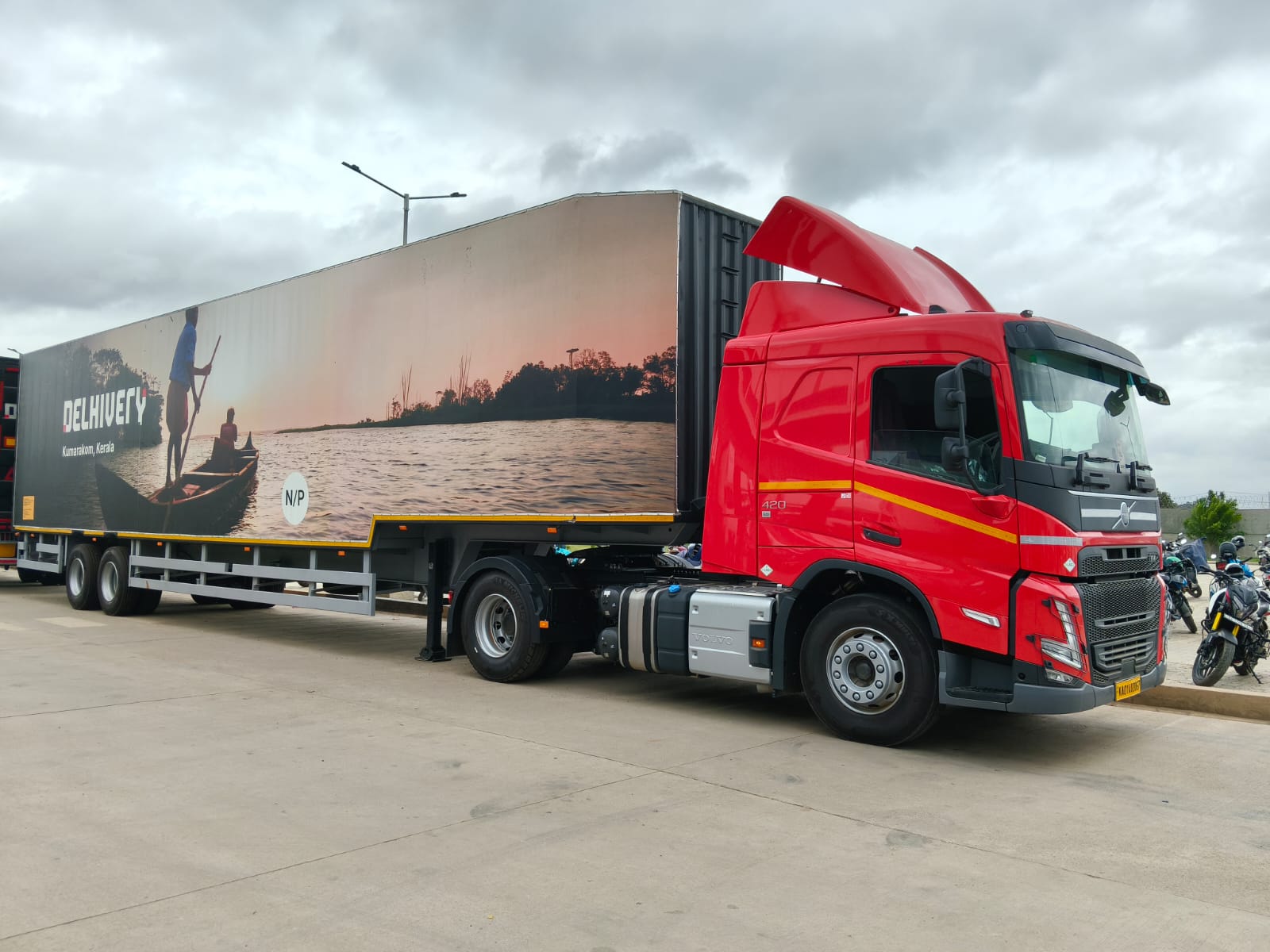
Power-Only Trucking: A Smarter Model for Long-Haul Freight
Smarter operating models can potentially make long-haul trucking with bigger trucks more efficient. Can Power-only trucking be a game-changer?

Taslima Khan

Engineering & Technology
Series: Finding India (Part I of II)
How a 15-member engineering team spent a decade using data generated by millions of deliveries and built a mapping platform for logistics.

Delhivery Engineering

Engineering & Technology
Series: Finding India (Part II of II)
How engineers taught machines to understand India’s complex addresses, transforming years of delivery data into a mapping intelligence platform built for logistics.
Delhivery Engineering
Ship with the largest integrated logistics company
Create your business account now
SERVICES
Delhivery One
Explore Now
Information Security Policy
Delhivery is committed to safeguarding the confidentiality, integrity and availability of all physical and electronic information assets of the organization. We ensure that the regulatory, operational and contractual requirements are fulfilled.
Disclaimer
Operational metrics listed are as of August 04, 2023