Post Purchase
Many delivery failures begin at checkout. Learn how better address capture, mandatory landmarks, pin code validation and phone verification can reduce delivery exceptions.

Delhivery Research
5 min read

Before changing your delivery process, count your exceptions. Review the last 30 days of orders with incomplete addresses, untraceable locations and unreachable phone numbers. For many ecommerce businesses, these failures are among the largest sources of avoidable delivery costs and they often begin with the checkout form.
The Address is Captured, Not Received
It is tempting to treat a bad address as something the customer did to you. It is more useful to treat it as something your form allowed. A single free-text box, three optional fields and no validation will produce short, unusable addresses from perfectly cooperative buyers, because people type the minimum a form accepts. Redesign the form and the same customers give you what you need.
The Checkout Changes that Matter
● Pin code first, then auto-fill. Ask for the pin code before the city and state, then populate both automatically and lock them. This removes the most common mismatch, where the pin code belongs to one district and the typed city to another.
● A separate, mandatory landmark field. Landmarks are how addresses actually work here. Left inside the main address box, they get skipped. Given their own labelled field, they get filled.
● House, flat or shop number as its own field. An address line with no digit in it almost never identifies a specific door. Making the number a separate required field is a two-line change with an outsized effect.
● Building or society name, and floor. In apartment complexes and newer developments this is the difference between reaching the gate and reaching the customer.
● A verified phone number. Send an OTP at checkout. An unverified number is a typo waiting to become an exception. Offer an optional alternate number field as well - it is the single most useful field on the form when the first number is not answered.
● Length and content checks. Flag addresses under about 25 characters, addresses with no numeral anywhere, and addresses that are only a locality name. Do not block the order; ask one follow-up question.
● Address type. Home, office or shop, with a note that office addresses are only useful during working hours. This lets you set expectations rather than discover the problem on the day.
Newly Built Localities: What Delivery Executives Need
New developments are where addressing is hardest: streets are unnamed, numbering is incomplete, and map data lags construction by years. The address that works there contains, in this order: sector or block, project or society name, tower or building identifier, floor, flat number, one landmark that a local person would recognise, and a phone that will be answered. Write that sequence down as your standard, and shape your form to produce it.
Two additions help more than they look like they will. A note on gate access - "entry from the rear gate, visitors' book at the guard desk" - saves a call. And a delivery-window preference, even a rough one, gets the customer to the door on the first attempt.
Clean the Addresses You Did Not Capture
Orders arriving from other sales channels and from social messages will not follow your form's rules. Do not dispatch them as they come.
1. Run every inbound address through the same checks you apply at your own checkout: pin code against city, presence of a numeral, minimum length, landmark present.
2. Anything that fails gets one confirmation message before it is packed - a WhatsApp with the address as you have it and a request to correct or confirm.
3. For repeat customers, re-confirm a saved address if it has not been used in six months. People move, and a stale saved address is a confident-looking error.
4. Keep corrected addresses. If a customer gave you a better version once, use it next time instead of the one the channel supplied.
What You Can Do
1. Count your address and phone exception codes for the last 30 days. That number is your baseline.
2. Add a mandatory landmark field and a separate flat or house number field to your checkout.
3. Turn on pin code-first auto-fill of city and state, and lock those fields.
4. Add OTP verification on the phone number, plus an optional alternate number.
5. Write your address standard for newly built localities on one page and use it when you review flagged orders before dispatch.
6. Recount the same exception codes 30 days later and see what moved.
These are the popular topics you might want to check out
Latest blog posts
View all blogs
Supply Chain Insights
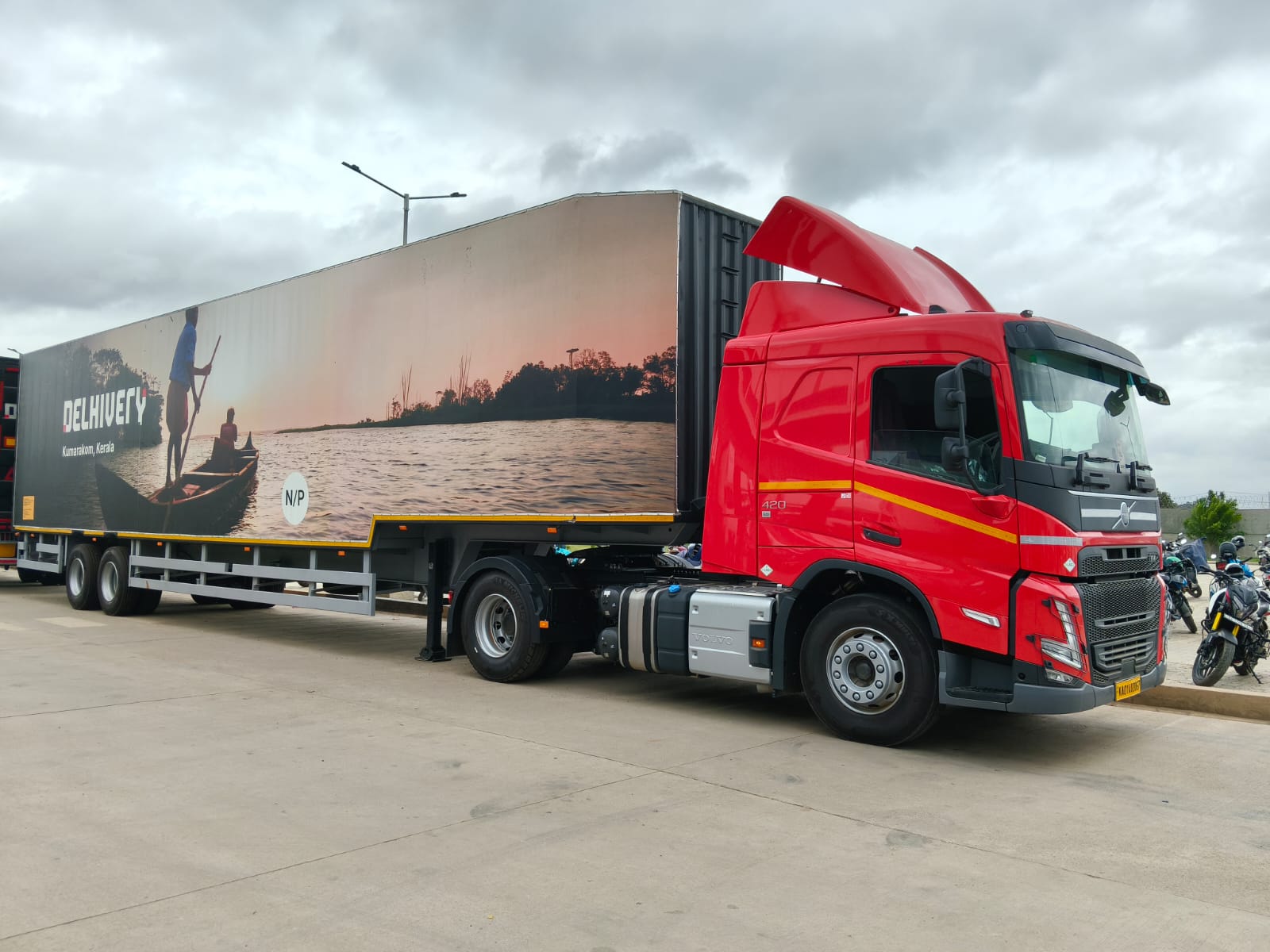
Power-Only Trucking: A Smarter Model for Long-Haul Freight
Smarter operating models can potentially make long-haul trucking with bigger trucks more efficient. Can Power-only trucking be a game-changer?

Taslima Khan

Engineering & Technology
Series: Finding India (Part I of II)
How a 15-member engineering team spent a decade using data generated by millions of deliveries and built a mapping platform for logistics.

Delhivery Engineering

Engineering & Technology
Series: Finding India (Part II of II)
How engineers taught machines to understand India’s complex addresses, transforming years of delivery data into a mapping intelligence platform built for logistics.
Delhivery Engineering
Ship with the largest integrated logistics company
Create your business account now
SERVICES
Delhivery One
Explore Now
Information Security Policy
Delhivery is committed to safeguarding the confidentiality, integrity and availability of all physical and electronic information assets of the organization. We ensure that the regulatory, operational and contractual requirements are fulfilled.
Disclaimer
Operational metrics listed are as of August 04, 2023