B2B Freight
What PTL freight is, how consignments get consolidated and priced by weight and volume, and what tracking looks like at consignment level.

Delhivery Research
5 min read

Part-truckload, or PTL, is the freight product growing Indian businesses reach when a parcel stops fitting and a full truck is far too much. It sits between the two, and it is the one logistics product most first-time shippers have never had explained to them properly. Get the model straight before your first consignment moves.
Three Products, Three Different Economics
Full truckload (FTL). You book the vehicle. It loads at your gate, runs to one destination and unloads. You pay for it whether you fill it or not, there is no handling in between, and transit time is close to drive time.
Parcel or express. You book individual pieces. Each is labelled, scanned and sorted independently, moves through automated hubs and is delivered to a named person. You pay per piece on chargeable weight.
Part-truckload (PTL). You book a consignment: several pieces going together to one recipient, sharing a vehicle with other consignors' goods headed the same way. You pay for the share of the vehicle your goods occupy.
The unit of thought changes with the product. In parcel, it is a box. In PTL, it is the consignment, and pricing, documentation, tracking and exceptions are all organized around it.
How Consolidation Actually Works
Your consignment is collected and taken to an origin branch, where it is measured, weighed and grouped with other consignments on the same trunk route. The consolidated load runs as a line-haul to a destination branch, is broken down there, and the individual consignments go out for delivery on smaller vehicles.
Two things follow. Your goods are handled more than once, which is why freight cartons are built to be stacked, strapped and moved by a forklift rather than opened by a delighted customer. And the line-haul departs when it is planned to depart, so missing a dispatch cut-off does not delay you by an hour — it delays you by a departure.
Why Pricing Responds to Weight and Volume
A vehicle has two limits: how much it can legally carry, and how much floor and stack space it has. Dense goods hit the weight limit first. Light, bulky goods hit the space limit first, and a consignment of empty containers can fill a quarter of a trailer while weighing very little.
Freight pricing therefore reads both, and the higher of the two governs. It is the same principle as volumetric weight in parcels, applied to a truck rather than a box. Three levers sit in your hands before you ever discuss a rate:
Reduce void space. Right-sized cartons price better than half-empty ones.
Stack squarely. Uniform carton footprints palletize cleanly. Odd shapes waste the space around them.
Consolidate dispatches. Two consignments to one dealer in the same week usually cost more than one carrying both.
Rates and transit vary by lane, by direction on the same lane, and by season, so do not work from a number someone in another category quoted you. Put your actual origin pin code, destination pin code, weight and dimensions into the B2B serviceability and rate calculator on Delhivery One and read the answer for your own lane.
What Visibility Looks Like When the Unit Is a Consignment
In parcel, you track a waybill and see a chain of scans ending at a doorstep. In freight, tracking is organized around the consignment and its documents.
Each shipment carries a 9-digit Lorry Receipt Number, the LRN, and several shipments to one recipient group under a single order with your own Order ID against it. A dispatch of nine cartons to one distributor is one order you can discuss with your buyer, with the shipment references underneath it.
Scan density is lower than parcel by design: pickup, origin branch, line-haul, destination branch, delivery. Judge tracking by whether it tells the truth at the points that matter, not by how many rows it prints.
Exceptions are where freight visibility earns its keep. A consignment can be held for a missing e-way bill, refused at a gate for arriving outside its appointment window, or short-received against the invoice. Delhivery's B2B exceptions management is where those surface. Check it daily on dispatch days rather than waiting for the buyer's accounts team to call.
Getting Your First Consignment Out Cleanly
Weigh and measure the packed cartons, not the products, and register pickup and delivery locations with contact names and hours.
Raise the order, create the shipments under it, and note each LRN in your dispatch register.
Prepare the invoice with a clear goods description, quantity and price, and generate the e-way bill where invoice value crosses Rs. 50,000.
Confirm whether the receiver needs an appointment, and book it before the vehicle is loaded.
Photograph the loaded, strapped cartons before the vehicle closes.
What You Can Do
Pick one dispatch going to a business address and price it as a consignment rather than as separate parcels.
Measure your three commonest outer cartons and check how squarely they stack on a standard pallet footprint.
Set a dispatch cut-off time for freight days and tell your packing team what it is.
Add an LRN column to your dispatch register so your sales team and your buyer quote one reference.
Open B2B exceptions once a day for the first month, so you know what a normal week looks like.
These are the popular topics you might want to check out
Latest blog posts
View all blogs
Supply Chain Insights
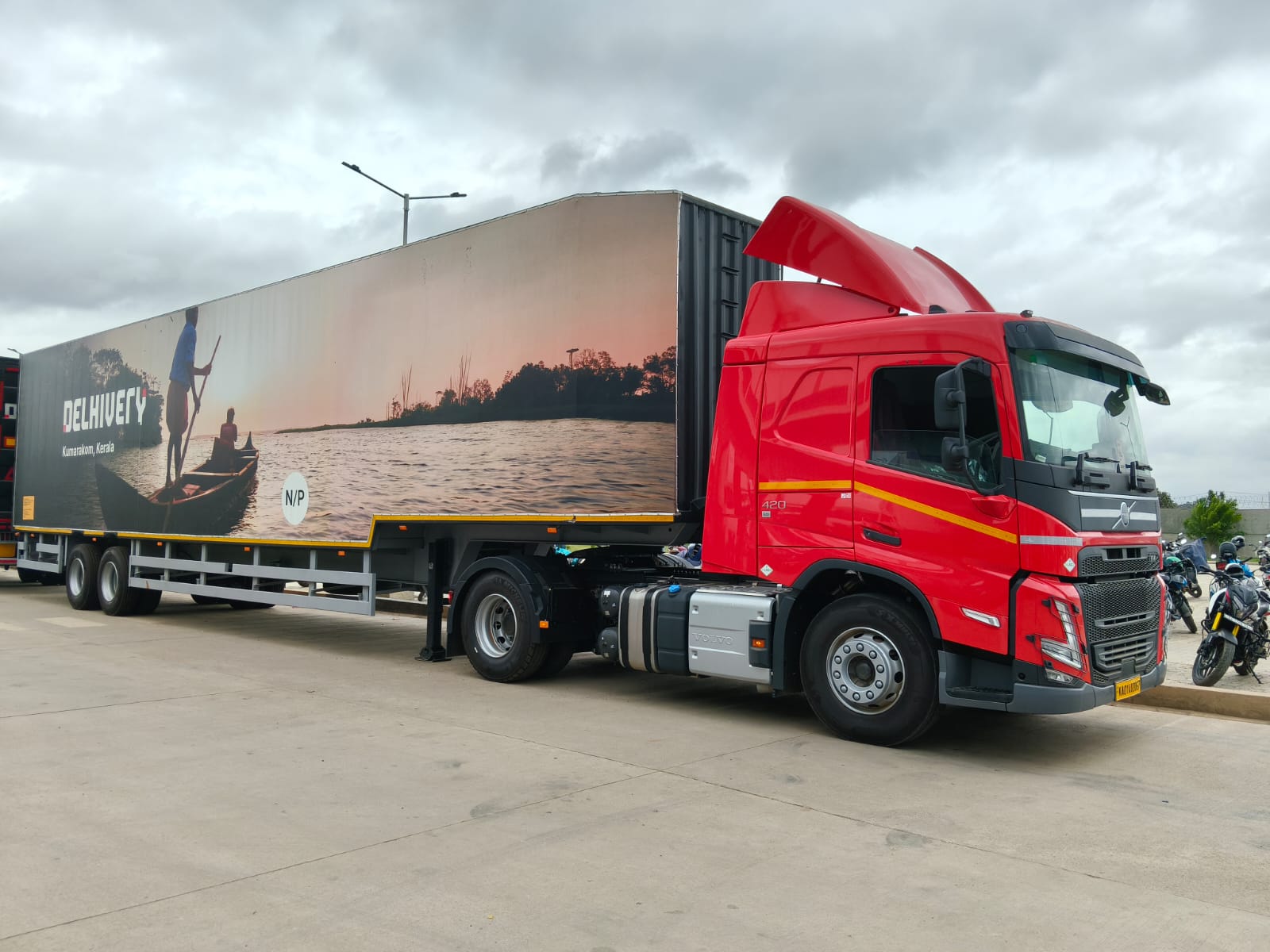
Power-Only Trucking: A Smarter Model for Long-Haul Freight
Smarter operating models can potentially make long-haul trucking with bigger trucks more efficient. Can Power-only trucking be a game-changer?

Taslima Khan
Engineering & Technology
Series: Finding India (Part I of II)
How a 15-member engineering team spent a decade using data generated by millions of deliveries and built a mapping platform for logistics.

Delhivery Engineering

Engineering & Technology
Series: Finding India (Part II of II)
How engineers taught machines to understand India’s complex addresses, transforming years of delivery data into a mapping intelligence platform built for logistics.
Delhivery Engineering
Ship with the largest integrated logistics company
Create your business account now
SERVICES
Delhivery One
Explore Now
Information Security Policy
Delhivery is committed to safeguarding the confidentiality, integrity and availability of all physical and electronic information assets of the organization. We ensure that the regulatory, operational and contractual requirements are fulfilled.
Disclaimer
Operational metrics listed are as of August 04, 2023