Shipping
Shipping costs vary by destination because distance, delivery density, feeder routes and last-mile effort all affect the real cost of moving a parcel. For SMEs, zone-aware pricing helps balance reach with sustainable freight costs.

Delhivery Research
5 min read

Two customers order the same 500 gram product on the same day. One is 40 kilometres away, one is in a district town in the Northeast. The parcel is identical but the price to move it is not. That is the rate card describing, fairly accurately, how much road, air, handling and time each parcel will consume.
What a Zone Actually Measures
A zone is a distance-and-difficulty band between your pickup pin code and the delivery pin code. Most rate cards in India use five or six of them, and the shape is consistent even though the labels differ:
● Local or intracity - same city as your pickup location.
● Regional - within the same state, or a defined cluster of neighbouring states.
● Metro to metro - between the large cities, where lanes run daily in both directions.
● Rest of India - everything else on the mainland.
● Special zones - the Northeast, Jammu and Kashmir, Ladakh, Andaman and Nicobar, and some hill districts.
The bands are not tracking straight-line kilometres. A parcel from Mumbai to Bengaluru covers more ground than one from Mumbai to a village in interior Vidarbha, and usually costs less to move: the first rides a dense daily lane, the second needs a dedicated last leg.
Why a Deeper Pin Code Costs More to Serve
Between the destination hub and the customer's door, the economics change completely. In a metro, one delivery executive covers dozens of parcels within a few square kilometres. In a small town, the same executive may cover 30 or 40 kilometre of route for a fraction of that drop density.
Three things drive the difference:
1. Drops per route. Cost per parcel on the last leg is route cost divided by parcels delivered on it. Thin volume puts a higher share of the route on each parcel.
2. Feeder legs. A remote pin code is often served by a smaller vehicle from a branch that is itself fed from a district hub. Each leg is real handling, not paperwork.
3. Reattempt cost. In a dense area a second attempt is cheap. On a long rural beat it is a meaningful share of the day.
This is exactly what you are buying when you sell into these markets. Depth of coverage is the reason a small brand in Surat can take an order from a town of 40,000 people and fulfil it. The zone premium is the price of that reach, and for most SMEs the incremental order is comfortably worth having.
Surface and Air Move the Number Again
Zone sets the distance band. Mode sets how the parcel crosses it. Surface moves by road on a trunk network and is priced lower; air buys a day or two on long lanes and prices accordingly. For the special zones, air is often not a premium option but the practical way in.
For most SME catalogues, surface on regional and metro lanes with considered use of air on long or remote lanes is the sensible default. The exception is anything perishable, dated or urgent, where the product decides the mode, not the rate card.
Building Zone-Aware Charges into Checkout
Now the commercial half. You have a cost that varies by destination and a checkout where variation makes people hesitate. Three workable approaches:
● Blended flat charge. Compute weighted average freight across your actual zone mix over 90 days, and set one shipping charge close to it. Simple and predictable, as long as you recompute it every quarter.
● Two-tier charge. One rate for local and regional, a higher one for everything else. Customers accept this readily because it matches their intuition about distance. It captures most of the variation with almost none of the complexity.
● Threshold with zone awareness. Free shipping above a basket value, with a higher threshold for far zones. Use it only if your checkout shows the threshold before the cart page; a surprise at payment costs more than the freight difference.
Two rules regardless. Show the charge early - product page or cart, not the last step. And never let a zone premium make a serviceable pin code look unserviceable at checkout; you have paid for that reach, so sell into it.
What You Can Do
● Pull your last quarter of orders and tabulate them by zone. Most SMEs find their mix is more concentrated than they assumed, which makes a blended charge safer than it feels.
● Compute weighted average freight per order across that actual mix, not across the rate card.
● Compare it to what you currently charge for shipping. If the gap is more than a few rupees, decide deliberately whether it sits in the product price or the shipping line.
● Test a two-tier charge against your current flat charge for four weeks and watch conversion by zone, not just overall.
These are the popular topics you might want to check out
Latest blog posts
View all blogs
Supply Chain Insights
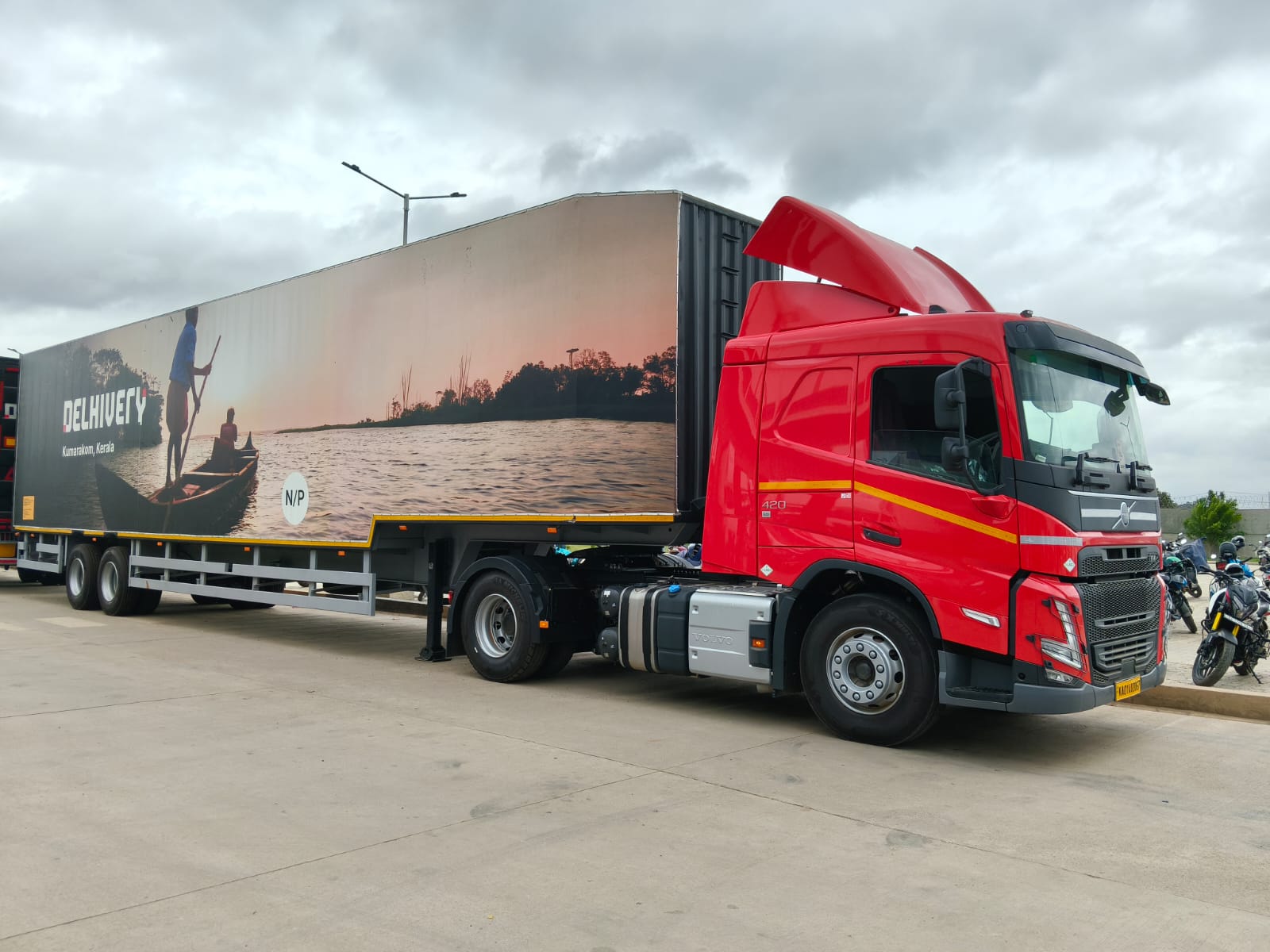
Power-Only Trucking: A Smarter Model for Long-Haul Freight
Smarter operating models can potentially make long-haul trucking with bigger trucks more efficient. Can Power-only trucking be a game-changer?

Taslima Khan

Engineering & Technology
Series: Finding India (Part I of II)
How a 15-member engineering team spent a decade using data generated by millions of deliveries and built a mapping platform for logistics.

Delhivery Engineering

Engineering & Technology
Series: Finding India (Part II of II)
How engineers taught machines to understand India’s complex addresses, transforming years of delivery data into a mapping intelligence platform built for logistics.
Delhivery Engineering
Ship with the largest integrated logistics company
Create your business account now
SERVICES
Delhivery One
Explore Now
Information Security Policy
Delhivery is committed to safeguarding the confidentiality, integrity and availability of all physical and electronic information assets of the organization. We ensure that the regulatory, operational and contractual requirements are fulfilled.
Disclaimer
Operational metrics listed are as of August 04, 2023